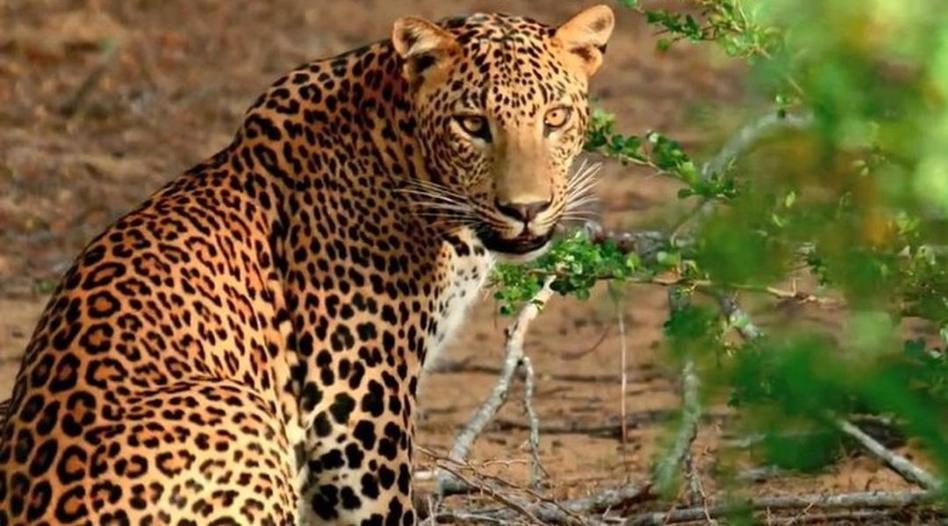
SRI LANKA; ENRICHED WITH WILDLIFE
Sri Lanka is an island residing in the Indian Ocean and located between longitudes E 79 ° 39' and 81 ° 54’, and latitudes N 5 ° 54' and 9 ° 52' with a surface area of 65,000km2. The coastal areas are low-lying and the northern part of the country is mostly flat. The south-central region of the country is mountainous (elevation is ranging from 900m to 2440m) and surrounded by upland belt.
The core regions of the central highlands contain many complex topographical features such as ridges, peaks, plateaus, basins, valleys and escarpments. These topographical features strongly affect the spatial patterns of winds, seasonal rainfall, temperature, relative humidity and other climatic elements, particularly during the monsoon seasons. There are three subdivisions of the wet zone including lowlands, medium hills and upper highlands. The distribution of plant and animal lives in the hill zone (considering both medium hills and upper highlands) are varying with patterns of climate and elevation. The geographic distribution of the endemics also displays a clear pattern. The lowest number is found in the relatively dryer areas of the island and the highest numbers in the lowlands of the wet.
Sri Lanka has enriched with high biodiversity with including flora and fauna. Unfortunately, now we have only a total of 1,951,473 hectares of natural forests covering 29.7% of land area according to assessment made in 2010. These terrestrial and aquatic eco systems are protected and managed by either the Forest Department or Department of Wildlife Conservation. They reserved protected areas as; three Strict Nature Reserves (SNR), twenty one National Parks (NP), five Nature reserves, one Jungle corridor, sixty three Sanctuaries, two Marine Reserves, two World/National heritage wilderness areas, fifty five Conservation Forests, three hundred sixty Forest reserves, four International Biosphere Reserves (MAB) and thirty one National Biosphere reserves.
These areas exhibit a remarkable diversity of species. When considering about the vertebrates, 119 freshwater fish species with 55 endemics, 105 endemics of 119 amphibians, 217 reptile species with 131 endemics, 498 bird species with 33 endemics and 141 mammals with 21 endemics reside in this island. As above, invertebrates as well as floral species are also enriched with this bio diversity hotspot. Significant animal creatures symbolize Sri Lankan bio diversity while attracting local and foreign visitors. In here, Department of Wildlife Conservation has declared seven animal species as “Top 7 Wild of Sri Lanka”. Asian Elephant, Sloth Bear, Leopard, Black-necked Stork, Saltwater Crocodile, Leatherback Turtle and Blue Whale are introduced under this theme and consider as the flagship species for wildlife conservation.
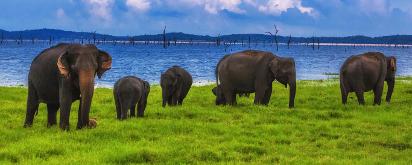
Asian Elephant
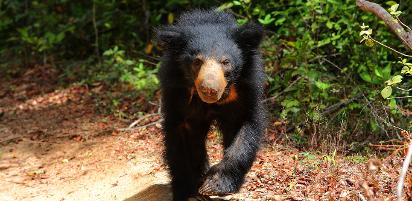
Sloth Bear
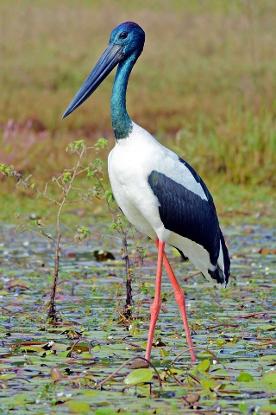
Black-necked Stork
Among the national parks, Yala national park, Udawalawa national park, Wilpattu national park and Bundal national park are mostly distributed in the dry zone. Horton Plains National Park is on the highest plateau in the island and home to a diverse array of wildlife as well as beautiful scenery. Forest Reserves also being able to improve the wildlife enthusiasm with adding huge value to the Sri Lankan wildlife. Sinharaja Rainforest, Knuckles Forest Range are beared first places among the forest regions. Kumana, Bundala like national parks and Anawilundawa, Kalametiya bird sanctuaries are provided the best habitats for residents as well as migratory birds. Pigeon national park and Gulf of Mannar marine national park ensure the protection of marine bio diversity around the Sri Lanka. These wildlife destinations can be able to capture the attraction of nature lovers.
Let’s start to travel to the wild…… Feel the nature….. Gain the knowledge…….
© Copyright Wildlife of Sri Lanka