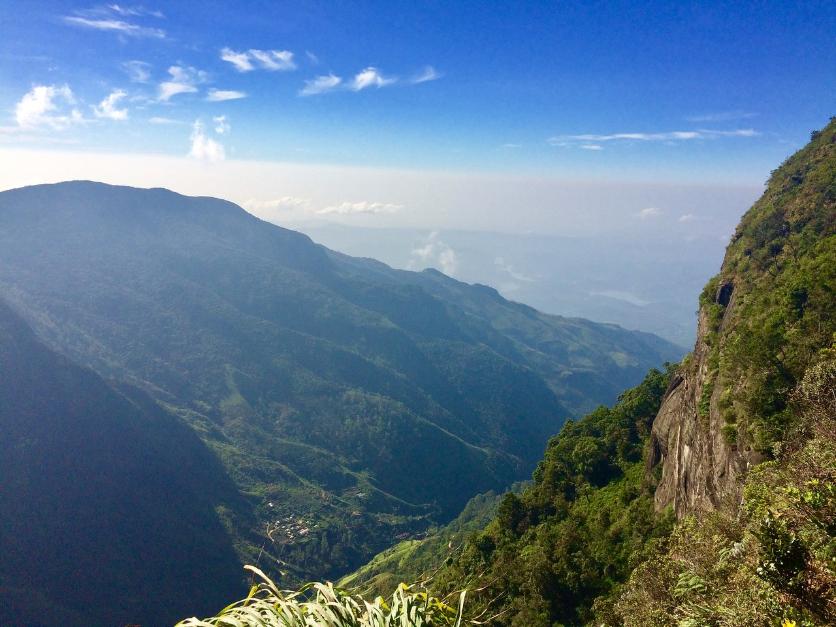
Horton Plains National Park
Horton Plains National Park is located between the western and central ridges of the central highlands massif in the latitudes 6°47'-60 50'N and longitudes 80°46' - 80°50'E and the elevation is ranging from 1800-2389 m above sea level. When traveling to park, two entrances are waiting for welcome the visitors. One entrance at Pattipola, gives access for the visitors who come via Nuwara Eliya and Ohiya entrance can be used by visitors who travel via the Haputhale. The trail is a nine kilometer circular route through the park by observing uniqueness of the nature of this montane forest. The World’s End has a simply extraordinary view all the way across this island country to the shore and beyond. Baker’s Falls is the tributary of the river Belihuloya, which is gaining the more visitor attraction. Horton Plains spreads across over 3,169 hectares of the highest tableland of the island. Kirigalpotta (2,389m) is the second highest peak that arises on West end and Totupola kanda (2.357m) is the third highest peak located at the North end. These are waiting for obtaining a good hiking experience.
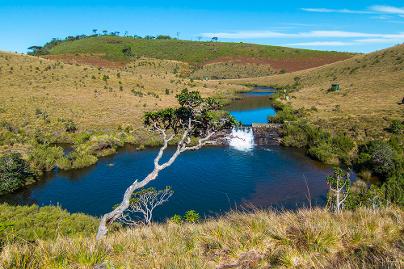
Chimini pool
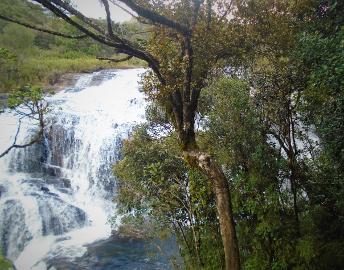
Baker’s Falls
This plateau was declared as a national park on 16th March 1988 and recently (Site on 30th July 2010) designated as a World Heritage Site by UNESCO due to the large number of endemic flora and fauna species. Higher elevation and precipitation cause higher wet and cold climate conditions than other regions of the country. A mean annual temperature of 15°C and mean annual rainfall of 2150 mm is attained by Horton Plains National Park. This plateau is located in the wet zone which experience Southwest Monsoon and Northeast Monsoons rains. Cloud cover and strong winds are dominated. Usually January and February are the driest months, when temperatures may reach 27 °C.
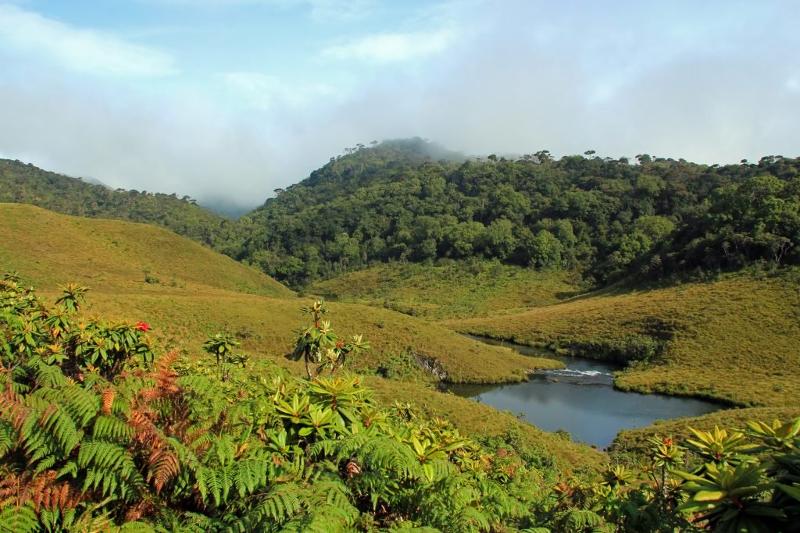
Tropical Montane Cloud Forests and Wet Patana Grasslands make up the vegetation of Horton Plains National Park with a narrow ecotone belt in between. This ecotone is an area comprised of herbs and shrubs. Forest and Patana are located in a mosaic pattern. The forest is restricted to the hilltops, mid or upper slopes and the grasslands and dwarf bamboo spread in the valleys and surrounding the streams.
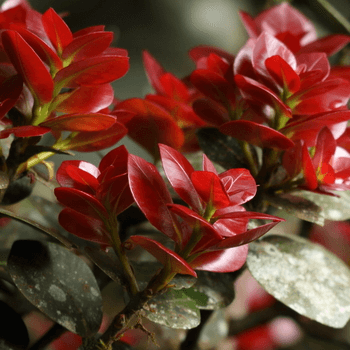
Calophyllum walkeri
Cloud forest habitat covers 39.7% of the total area. Undisturbed old-growth forest is low in height (15-20 m) and canopy trees are characteristically knotted and twisted due to the lower temperatures and high winds. Lauraceae, Symplocaceae and Myrtaceae are the dominant families and Syzygium revolutum, Neolitsea fuscata, Cinnamomum ovalifolium, Symplocoselegans, Calophyllum walkeri, Michelia nilagirica, Photinia integrifolia are dominant species which lead the forest canopy. These cloud forest habitats are classified as Tropical Montane Cloud Forests and have distinguished features such as shorter canopy trees with more slender trunks and gnarled branches; compact, dense crown with closely spaced, waxy leaves. The trunks as well as branches cover with epiphytes and mosses. Insectivores in the mixed species flocks feed on the insects in this vegetation.
Mosses, such as Frullania sp. and Bazzania sp. cover the small and large tree trunks and branches as thick coats. Usnea barbata or “old man’s beard” lichen also hangs on the branches of trees. There is a large tree fern species Cyathea crinita. Rhododendron arboreum ssp., Zeylanicum species can be identified as a characteristic species within the forest. Undergrowth of these forests often consist with Strobilanthes sp., Coleus sp., Osbeckia parvifolia, Impatiens spp., Pseudoxytenanthera monadelpha, Davidstea attenuata, and Ochlandra stridula. These understory plants can achieve limited sunlight and their density is low.
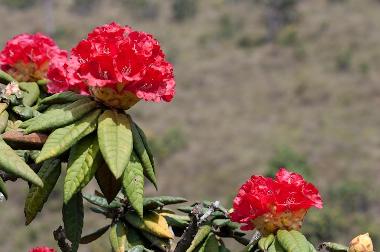
Rhododendron arboreum ssp. (Maha Rathmal)
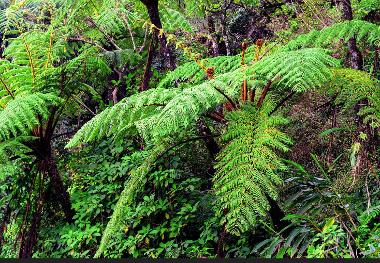
Fern species
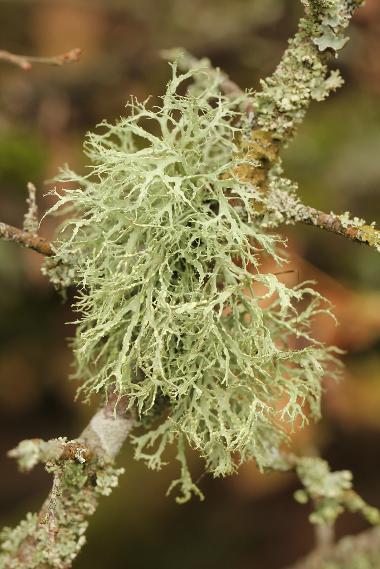
Usnea barbata (Old Man’s Beard)
Horton Plains National Park has higher endemicity with respect to amphibians (91%), reptiles (89%) and Mammals (39%). Several rare and endemic wetland invertebrate fauna (freshwater shrimp) and the Rainbow trout (Salmo gardineri), the only fish species survived in this aquatic bodies, can be observed.
Eleven species of amphibians have been recorded at Horton Plains National Park with ten species of them being endemic. Montane Hour-glass Tree-frog (Taruga eques), Sri Lanka Paddy Field Frog (Fejervarya greeni), Sri Lankan Narrow-mouthed Frog (Microhyla zeylanica), Ramanella palmateare are some of them.
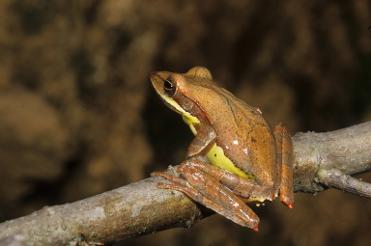
Montane Hour-glass Tree-frog (Taruga eques)
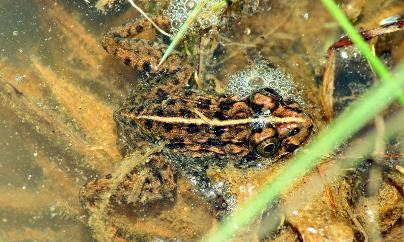
Sri Lanka Paddy Field Frog (Fejervarya greeni)
Nine species of reptiles with eight endemic species have been recorded. Rhino-horned Lizard (Ceratophora stoddartii), Pygmy Lizard (Cophotis ceylanica), Lanka Skink (Lankascincus taprobanensis) and Boie's Rough-sided Snake (Aspidura brachyorrhos) are some characters within them.
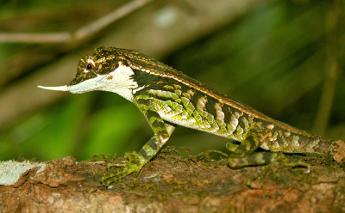
Rhino-horned Lizard (Ceratophora stoddartii)
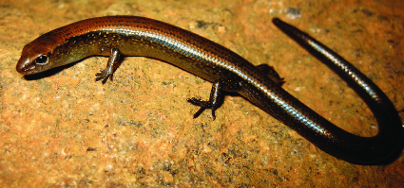
Lanka Skink (Lankascincus taprobanensis)
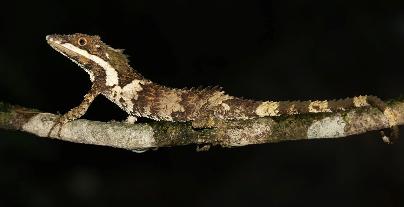
Pygmy Lizard (Cophotis ceylanica)
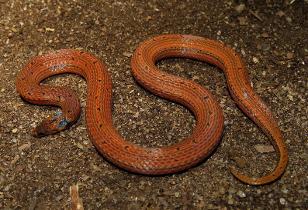
Boie's Rough-sided Snake (Aspidura brachyorrhos)
A total of 78 bird species have been recorded including 13 endemic species (18%) and three globally threatened species. Sri Lanka Bush Warbler, Sri Lanka Dull-blue Flycatcher, Sri Lanka Whistling Thrush, Sri LankaYellow-eared Bulbul, Sri Lanka Wood Pigeon, Sri Lanka White-eye, Spot-winged Thrush, Scaly Thrush, Brown-capped Babbler, Sri Lanka Spur-fowl, Sri Lanka Jungle-fowl, Black Bird, Pied Bushchat, Hill Swallow, Hill Munia, Mountain Hawk Eagle, Black Eagle and Jerdon’s Baza are increased the nature value. Mixed species feeding flocks are the significant feature can be observed within this montane habitat. In here, more than two bird species even mammal species also associate in foraging behavior and move together nevertheless aggregating with a specific food resource.
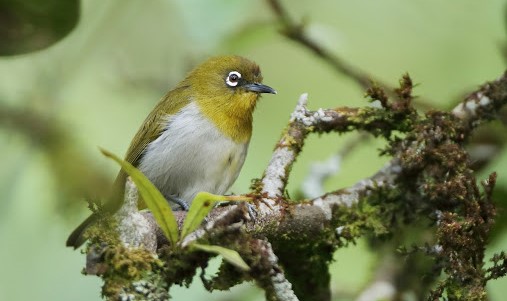
Sri Lanka White-eye
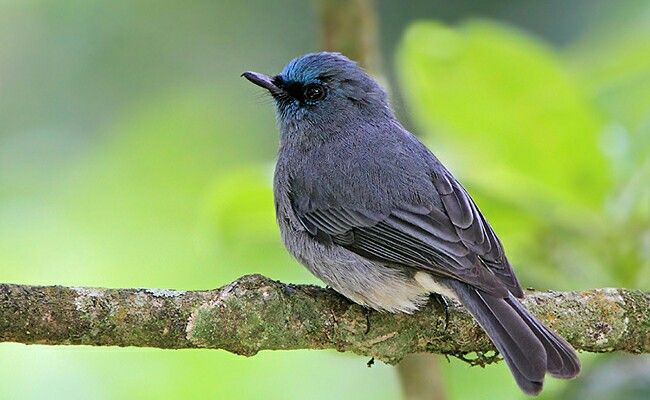
Sri Lanka Dull-blue Flycatcher
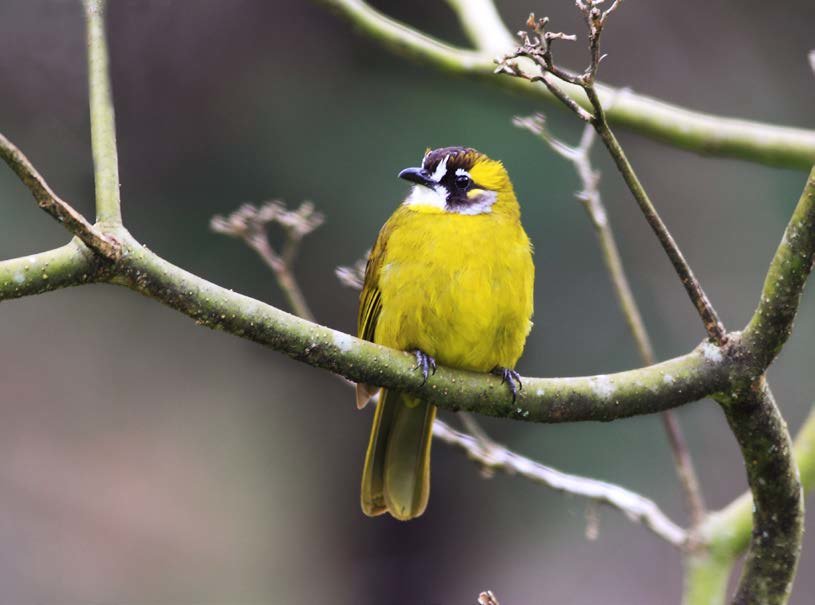
Sri Lanka Yellow-eared Bulbul
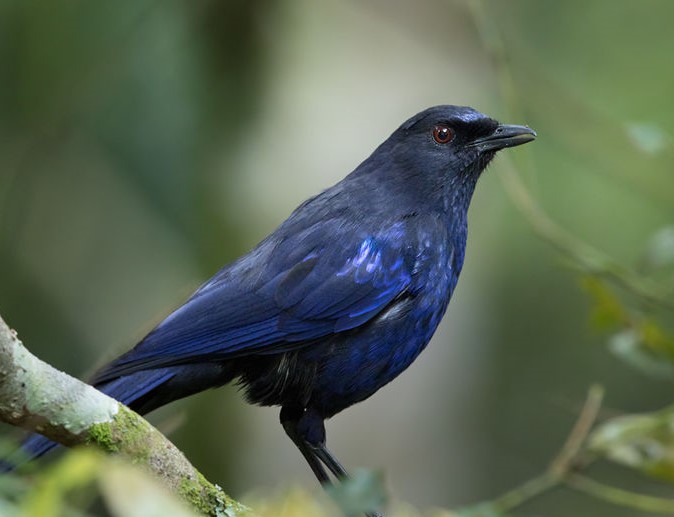
Sri Lanka Whistling Thrush
Horton Plains National Park has 28 species of mammals including globally threatened species. The most frequent site of wildlife at Horton Plains are herds of Sambar Deer. Among the other mammals in the park are Strip-necked Mongoose, Giant Squirrel, Wild Boar, endemic Bear Monkey and Toque Monkey are the frequent residents. Among the carnivores, Rusty-spotted Cat, Fishing Cat, Leopard and Otter play as predators at this site. The rare Horton Plains Slender Loris of Sri Lanka, also has been recognized in this park.
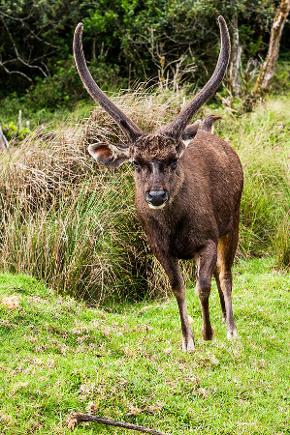
Sambar Deer
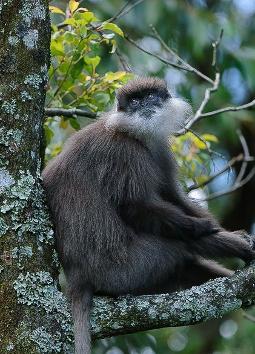
Bear Monkey
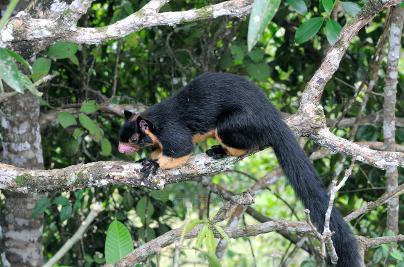
Giant Squirrel
Horton Plains is very delicate ecosystem but you can visit this unique treasure and feel the nature. Visitors have to remember to follow the park rules and give support to park staff, walk only on designated tracks, enjoy the nature without disturbing wild owners of this site, don’t take anything without photographs and only remain footprints without any rubbish. We have a huge responsibility to protect these values for future generations as well.
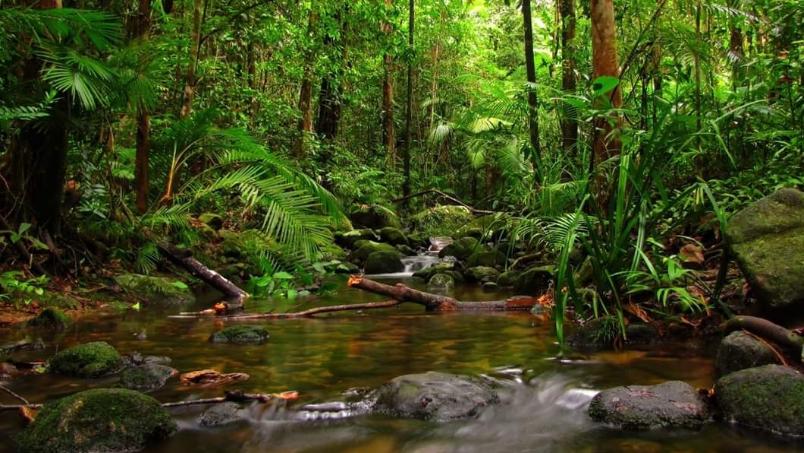
Sinharaja Forest Reserve
Sinharaja Forest Reserve is a Tropical Lowland Rain Forest which can be known as a biodiversity hotspot in Sri Lanka. International significance of Sinharaja has identified as a Biosphere Reserve, National Wilderness Area as well as World Heritage Site by UNESCO. This is located in southwest lowland wet zone of Sri Lanka while bordering the districts of Ratnapura, Galle and Matara. There are three entrances such as Pitadeniya, Kudawa and Morning Side waiting to welcome the visitors. Visitors who can reach to Sinharaja via Weddagala from Northern or Western part of the country or via Deniyaya from Southern area and others who are coming from Hambanthota can enter from Rakwana side also.
This living heritage extends over an area of 11,187 hectares with tropical wet evergreen forest type vegetation. The annual temperature is recorded between 18-27°C and February being the only dry month for this reserve. The forest reserve receives an annual rainfall of 3000-6000mm throughout the year. This wilderness area enriches with rainfall from both Southwest monsoon (May to September) and Northeast monsoon (December to February). This evergreen forest most of time consists with cool climate with little showers. Forest area is prospering with cool waterfalls, streams and crystal clear freshwater streams. Gin and Kalu Ganga rivers are two important water bodies and many waterways feed and nourish the water flows in this verdant forest reserve.
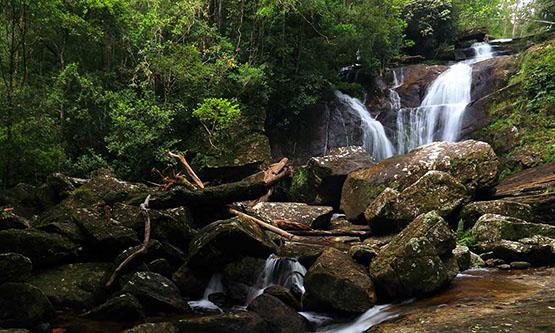
Due to the high degree of endemism this reserve, it became a UNESCO World Natural Heritage Site. Enormous flora population is inhabited in here. Average height of the trees varies between 35m – 40m and some individuals rise even up to 50m. The healthy ecosystem shows different layers in the canopy according to presence of species. The Emergent layer comprises of tall trees higher than 45m such as Shorea congestiflora, Shorea stipularis, Shorea affinis. Eagles, monkeys, butterflies and bats inhabit this layer.
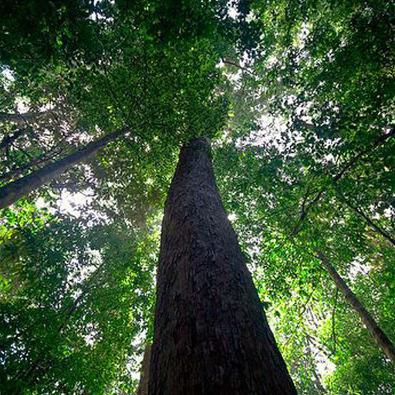
Shorea stipularis (Nawanda)
The Primary canopy layer is rising up to about 35m with including Shorea distichta and Shorea megistophylla like species. They are giving habitat to Monkeys, Flying Squirrels, Bats, Tree Frogs, Ants, Beetles and birds such as Flycatchers. The sub-canopy is at about 25m height with endemic Dichilanthe zeylanica, Syzygium neesianum, Palaquium rubiginosum etc. And insects are largely concentrated in here. . The ground layer referred to as the lowest stratum is composed of many rare and endemic herbal plants like Agrostistachys coriacea, Aporusa lanceolata, Bridelia mooni, Strombosa nana and Nargedia macrocapa.
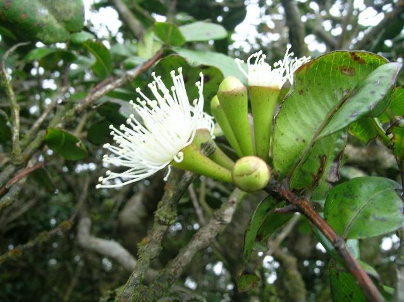
Agrostistachys coriacea
Ephiphytic mosses and liverworts, orchids and ferns are adorned on the floor of the forests as well as the tree trunks. Out of 211 wood species have been identified and 139 species are endemic within 66%. There is an unbelievable genetic potential is waiting to be tapped. Out of 25 genera endemic within 13 genera only restricted to Sinharaja forest. Some families show an endemism more than 90% such as Dipterocarpaceae family.
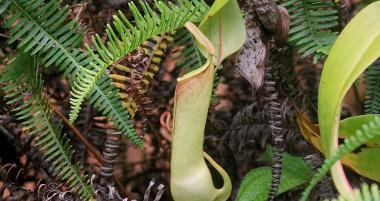
Nepenthes distillatoria (Bandura)
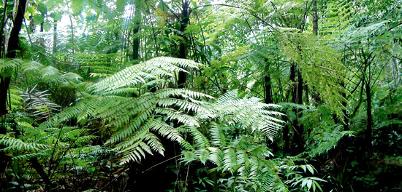
Fern species
The Sinharaja Forest Reserve bears various species of Fish, Amphibians, Reptiles, Birds and Mammals within this pristine ecosystem.
About 26 species of fish are resided in fresh water bodies of Sinharaja with 14 endemic species. Garra ceylonensis, Pauntis nigrofasciatus, Pantius singhala, Puntius pleurotaenia, Puntius cumingii, Rasbora wilpita etc. species are restricted to Sri Lanka take part in this forest.
Greater Hour-glass Tree Frog, Wrinkled Frog, Reed Frog and the Torrent Toad like species are found in this forest by increasing more than 50% of amphibian endemism.
Among the reptiles, Green Pit Viper and Hump-nosed Viper who are endemic to Sri Lanka, commonly found in this forest. Hump Snout Lizard (Lyriocephalus scutatus), Sri Lankan Kangaroo Lizard (Otocryptis wiegmanni) are endemic to Sri Lanka and represented the Agamides group of reptiles.
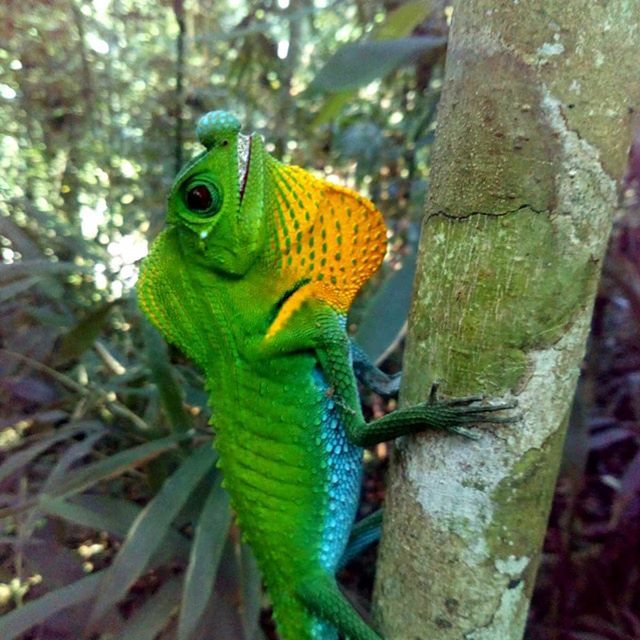
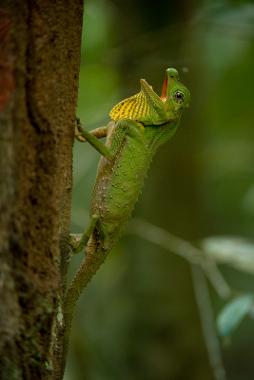
Hump Snout Lizard
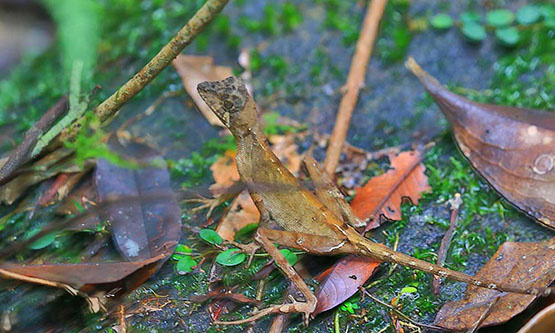
Sri Lankan Kangaroo Lizard
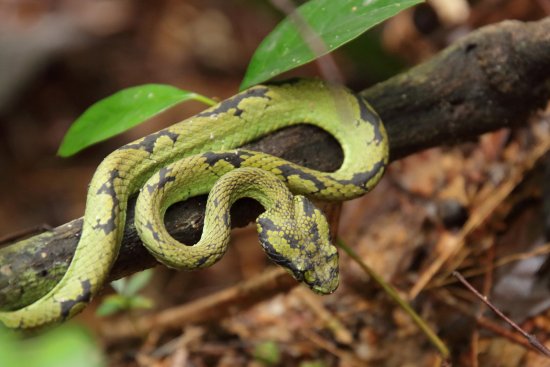
Green Pit Viper
Sinharaja has recorded over 154 species of birds within endemic Sri Lanka Blue Magpie, Red Faced Malkoha, Jungle Fowl, Spur Fowl, Ceylon Hanging Parrot, Ceylon Hill Mynah, Spotted-wing Thrush, Ashy-headed Laughing Thrush, Layard’s Parakeet and Ceylon Grey Hornbill etc. The well-known “Sinharaja Bird Wave” is the other significance which is presented by these bird species. These are mixed species feeding flocks and enriched with number of species as well as the size of the flock.
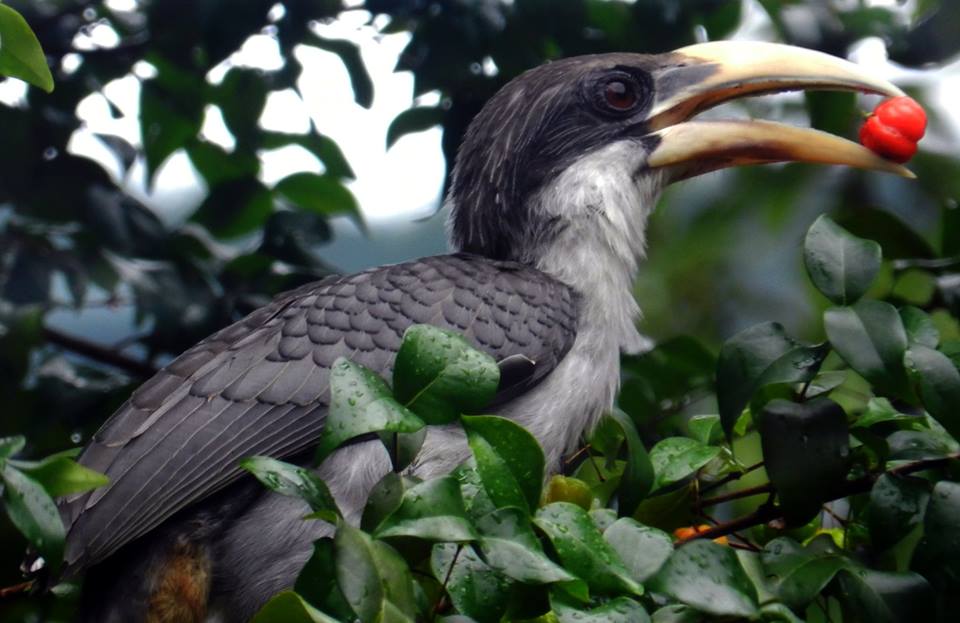
Ceylon Grey Hornbill
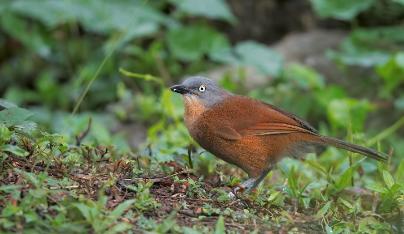
Ashy-headed Laughing Thrush
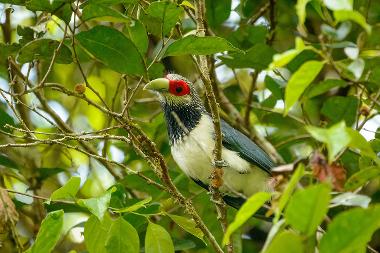
Red Faced Malkoha

Sri Lanka Blue magpie
When considering about the mammals, Barking Deer, Mouse Deer, Sambar Deer and Wild Boar are the commonly seen species. Within the primates, Purple-faced Langur, Toque Macaque and Reddish Brown Monkey are endemic endangered species. The larger mammal, Elephant is rare and randomly found on the Rakwana side. Other smaller mammals are consisted with Porcupine, Otter, Giant Squirrel, Small Striped Squirrel, Flying Squirrel, Brown Mongoose, Ring-tailed Civet, Golden Palm Civet, Rats, Bats and even the very rare Pangolin. Among the carnivores, Leopard, Fishing Cat, Rusty Spotted Cat etc. are playing the role as predators of others.
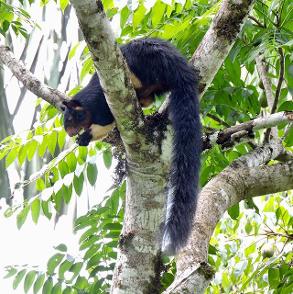
Giant Squirrel
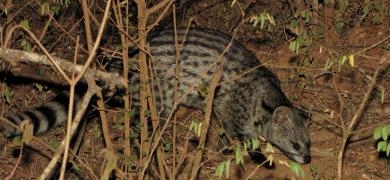
Ring-tailed Civet
This precious treasure, Sinharaja has been faced to threats from human activities such as devastation of forest for timber, illegal gene trafficking of fauna and flora, cultivation acivities etc. Fortunately, there is a higher probability of visitation of only actual nature lovers because it is a little harder for visitors to take a sight of the larger and attractive mammals such as the Leopard and Elephants. It reduces the visitor pressure on this wealthy ecosystem. A lot of attention and emphasis is now being placed on the conservation of these natural wonders and should be enjoyed the nature while conserving them for future generations as well.
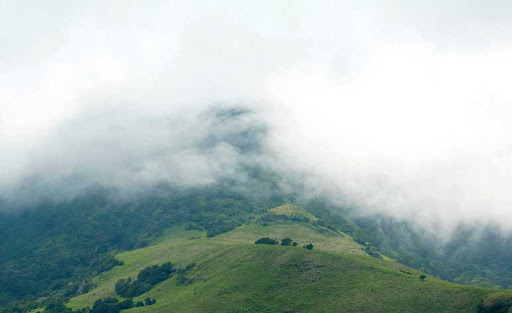
Knuckles Forest Reserve
Knuckles Conservation Forest is located in the Central province and Matale, Kandy are the nearest towns. Visitors can reach here on three routes via Rattota, via Wattegama and via Theldeniya. Knuckles Forest Reserve is situated above 1500m and extends through the 31,305ha land area. It is considered as a conservation forest, National Man and Biosphere Reserve as well as one site from two UNESCO World Heritage Sites that comes under the Central Highlands of Sri Lanka.
The central highlands of Sri Lanka is referred as the Central Massif and even though Knuckles is separated from Central massif and forming a distinct mountainous region known as the Knuckles Massif. Knuckles region is separated from Central massif by Kandy plateau and Dumbara valley by providing a passage for Mahaweli Ganga. There are 35 peaks and significantly five peaks of Kirigalpottha, Gombaniya, Knuckles, Koboneelagala and Dotulugala create the clenched fist shape within the Knuckles massif.
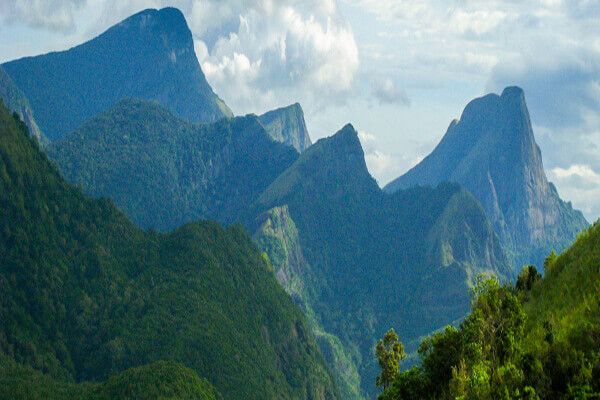
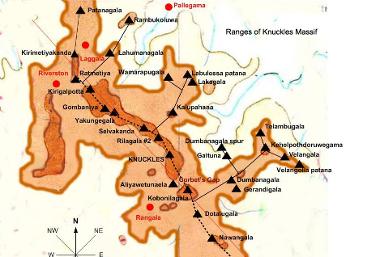
The annual average rainfall varies in between 2540mm and 5080mm with having heavy intensive rainfall during the period from November to February. The annual average temperature is 13- 18.5 0C within 915m elevation and it drops with increasing the elevation. When considering about the aquatic ecosystem of this site, the entire drainage system belongs to Mahaweli Ganga system. On the West of massif, Hulu Ganga and on the northeast direction of massif, Thelgamu Oya, Kalu Ganga, Heen Ganga and Hasalaka Oya connect with the Mahaweli Ganga at different points as it’s tributaries.
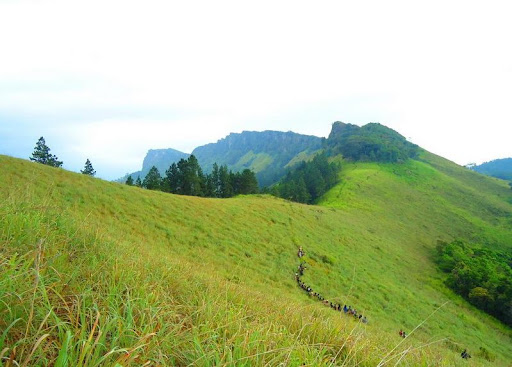
Bio diversity of the Knuckles massif shows significant differences from the Central massif while bearing many similarities with it. The reason behind that is the isolation and origination of Knuckles massif from it’s motherland Central highlands for thousand years. There are different types of habitats are arranged according to altitudes, rainfall as well as terrain with bearing unique features. In here, tropical montane wet evergreen forests or cloud forests, wet sub-montane forests, dry sclerophyllous sub-montane forests, semi-evergreen forests of the lower elevations, riverine forests and patana grasslands like various habitats can be observed at one site easily. Tropical montane rainforest covers 6700ha land area within 1060m-1370m elevation.
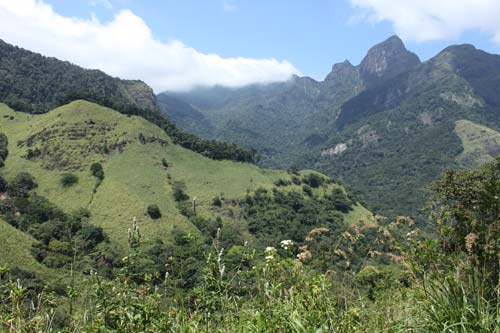
The montane and sub-montane forests consist similar features such as reducing height of trees from 15m to 5m with increasing altitudes, gnarled and twisted boles and branches, small leaves with tough coriaceous surfaces. Syzygium spp., Gordonia spp., Homalium ceylanicum, Bhesa ceylanica (Pelan) are some of dominant canopy tree species. The sub-canopy includes Pittosporum ceylanicum, Actinodaphne stenophylla and Scolopia pusilla species. The understory consists with Agrostistachys coriacea, Hortonia floribunda like endemic shrubs as well as ferns. Orchids and mosses covers boles of trees as Epiphytes.
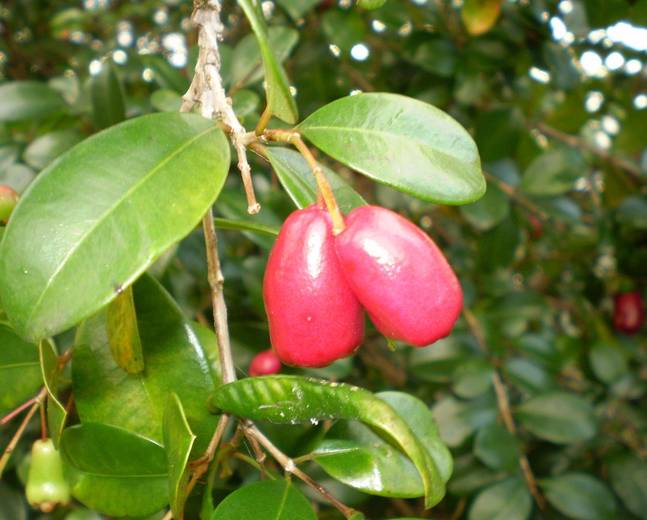
Syzygium spp.
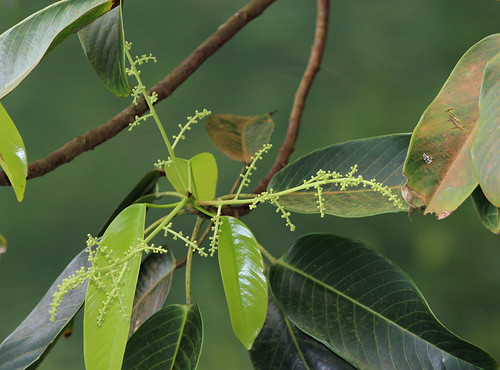
Bhesa ceylanica
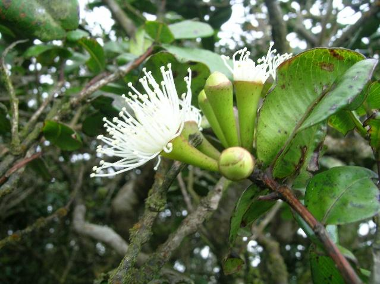
Agrostistachys coriacea
Wet montane forests have three formation types of forests. The low forests have trees with 10-15 m height and hard growth. The dominants are Calophyllum walkeri, Syzygium sclerophyllum, Garcinia echinocarpa etc. Elfin forests are allocated to 1430-1520m elevation and height growth is restricted to below 6m with Garcinia echinocarpa and Agrostistachys coriacea tree species. Pygmy forests are confined to altitude of 1520-1580m ridge tops with unique tropical broadleaved trees which are not more than 1m height. Syzygium spp. and Eugenia spp. are example tree species which are inhabited in that forest formation.
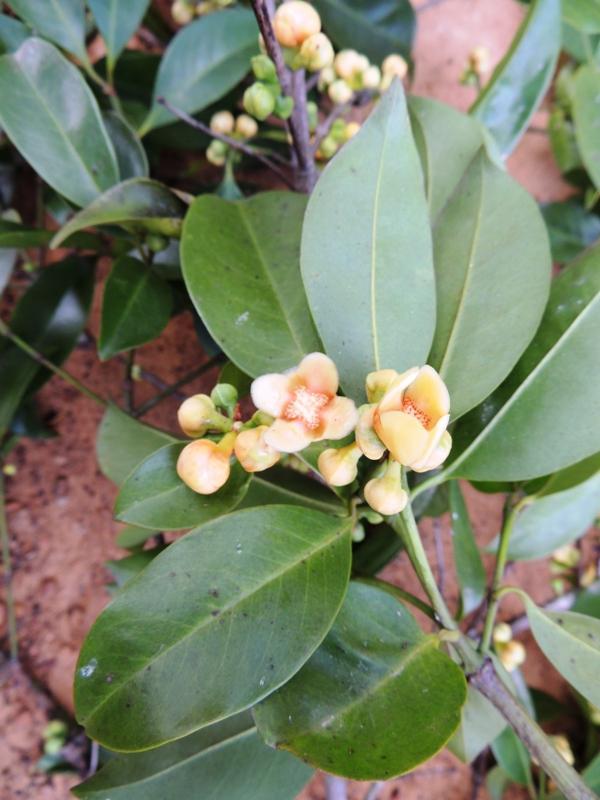
Garcinia echinocarpa
Wet montane grasslands are other important habitat which extends about 1000ha. In here, rock covers with just a thin soil layer. Due to that soli is not rich with nutrients and plant have adapted to find required nutrients by catching insects as carnivorous plants. The turf grass with about 10cm height and isolated scattered trees and shrubs reside in this plain habitat. Knuckles forest harbors a total of 1033 species of flowering plants belonging to 141 families with 160 endemic species.
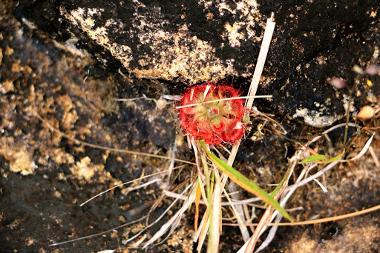
Kandulassa plant
There are 338 species belonging to 92 vertebrate families represent the all habitats of Knuckles forest. Fresh water habitats bear the diverse fish population which includes 24 fish species with 11 endemic species. Garra phillipsi, Blotched Filamented Barb (Puntius srilankensis) like species are restricted to Knuckles region.
Wealthy diversity of herpetefauana includes 28 amphibians with 18 endemics and 85 reptiles with 43 endemics. Kirtisinghe's Rock Frog (Nannophrys marmorta), Bigfoot Shrub Frog (Philautus macropus), Philautus fulvus, Philautus steineri and Philautus stuarti etc. are restricted amphibians to this site.
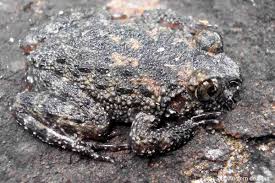
Kirtisinghe's Rock Frog (Nannophrys marmorta)
Leaf-nosed Lizard (Ceratophora tennentii), Knuckles Pygmy Lizard (Cophotis dumbarae) and Spineless Forest Lizard (Calotes liocephalus) are endemic agamids who are only found in Knuckles region. Endemic gecko species Dumbara Bent-toed Gecko (Cyrtodactylus soba) and endemic skink species (Chalcidoseps thwaitesii) are also restricted to this site.
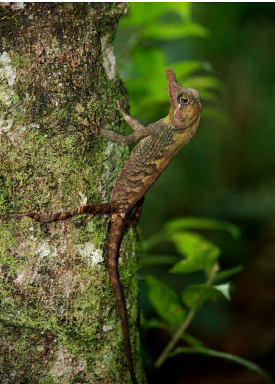
Leaf-nosed Lizard (Ceratophora tennentii)
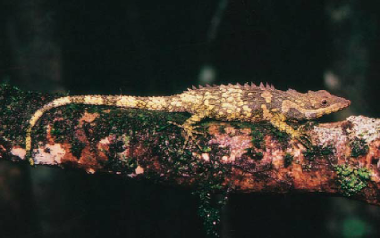
Knuckles Pygmy Lizard (Cophotis dumbarae)
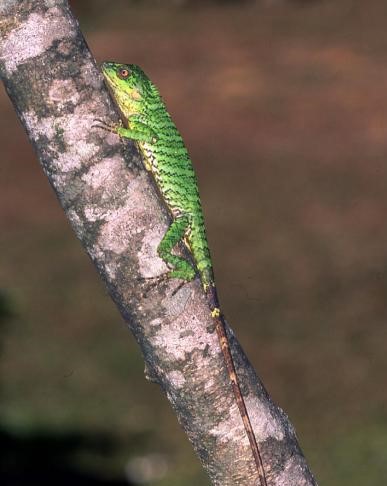
Spineless Forest Lizard (Calotes liocephalus)
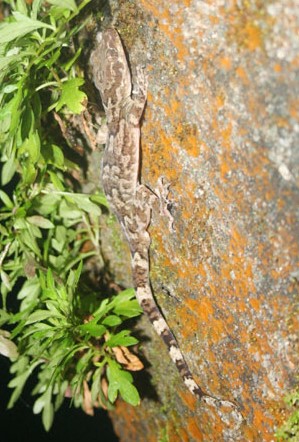
Dumbara Bent-toed Gecko (Cyrtodactylus soba)
The avifaunal diversity is enriched with 160 species with including 19 endemics and 5 globally threatened species. Sri Lanka Blue Magpie, Sri Lanka Wood Pigeon, Arrenga, Sri Lanka white eye, Sri Lanka Yellow- eared Bulbul, Sri Lanka Scimittar Babbler, Brown-capped Babbler, Dull-blue flycatcher like endemic birds and breeding residents such as Grey- headed Canary Flycatcher, Flame Minivet, Grate Tit, White-bellied Drongo, Malabar Trogon and Velvet- fronted Nuthatch etc. decorate this paradise. On the other hand, Mixes-species flocks are the other significant social organization behavior of birds and some mammal species which can be observed in this montane habitats also.
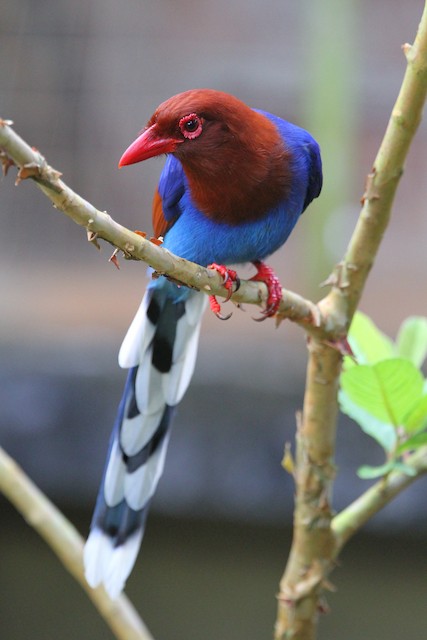
Sri Lanka Blue Magpie
Sri Lanka Whistling Thrush (Arrenga)
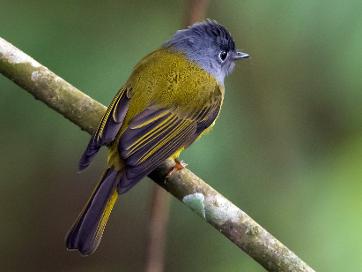
Grey- headed Canary Flycatcher
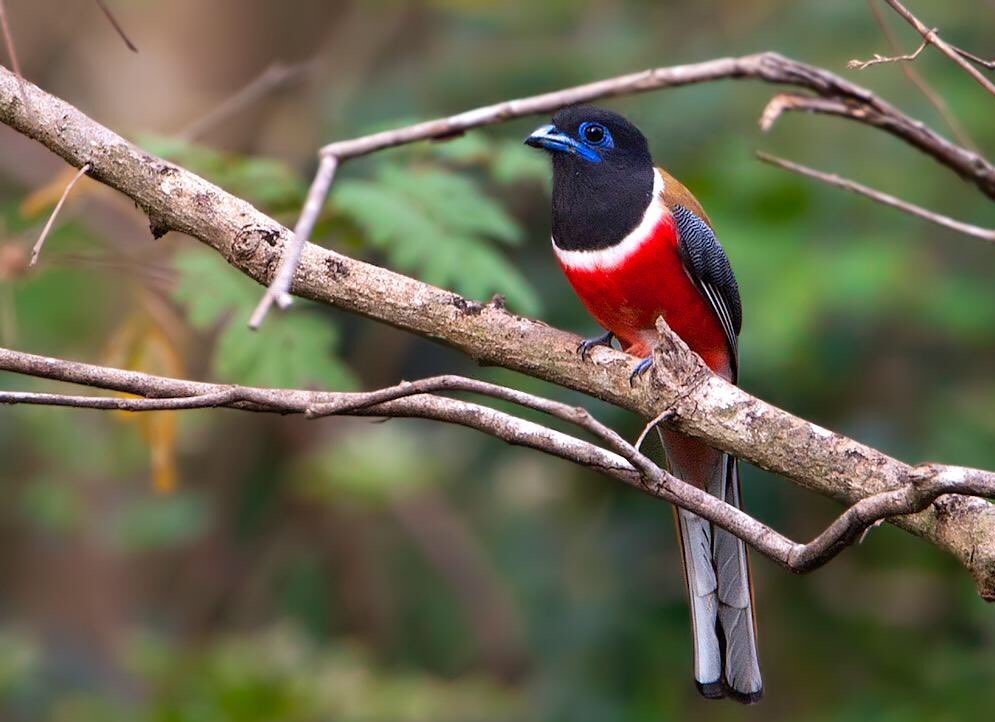
Malabar Trogon
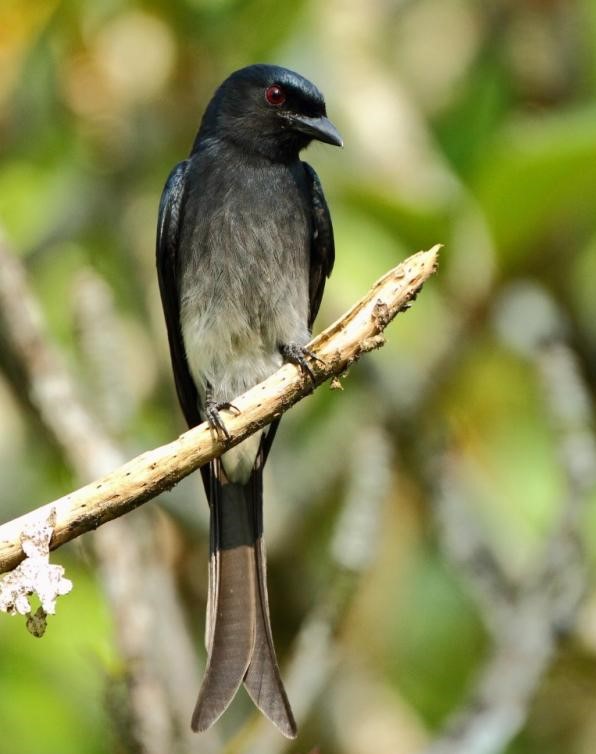
White-bellied Drongo
Knuckles forest is consisted with 41 species of mammals with 8 endemics. Endemic Purple-faced Monkey, endemic Toque Macaque and endemic Golden Palm Cat, Leopard, Otter and Sambur are inhabited in here. Elephants are very rare but they also have access from the Wasgamuwa National Park.
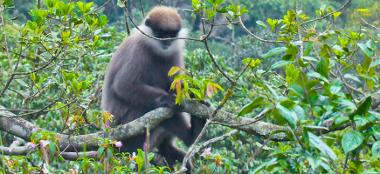
Purple-faced Monkey
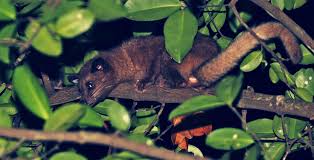
Golden Palm Cat
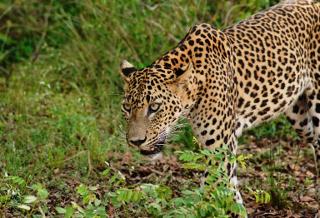
Leopard
As invertebrate population, 50 species of land snails with 78% endemics, 60 species of butterflies including 2 endemics and 7 endemic freshwater crab species with including 5 species who are only restricted to Knuckles range.
Riverston mountain area, Pitawala Pathana, Mini World's End are main destinations of visitors where in well-known Knuckles area.
The journey to Riverston mountain gives a great experience with clouds covering surrounding. Visitors can feel the frequently changing climate as well as bio diversity around the path. Final destination is indicated by two telecommunication towers at the summit of Riverston mountain which are hidden in the mist.
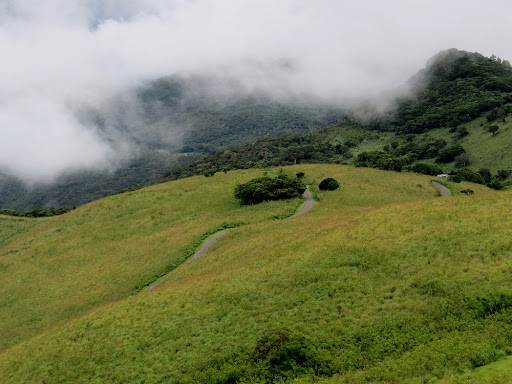
Pitawala Pathana shows unique features of a grassland habitat found in the Knuckles Conservation Forest. This site is located near to Riverston and provides a one edge for the Knuckles Mountain. The eye catching view of rest of other Knuckles massif which is worn the shawl of mist gives an unforgettable scenery for the mind of nature lovers.
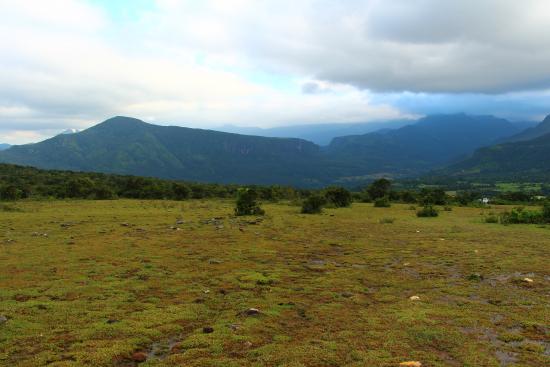
Mini World's End is the deep escarpment situated at Pitawala Pathana trail which bears similar appearance to Great World's End in Horton Plains National Park. This destination can fascinate the visitors by the panoramic view of Knuckles range as well as deep escarpments and valleys below. Fortunately, visitors can reach to this end with an easy nature trail of about 0.75 km via Pitawala Pathana. This amazing experience which is gained through this journey will be ruined your pains and given a better medication for your mind without any doubt.
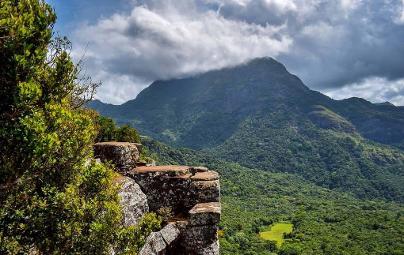
This significant natural heritage still bears the hidden bio diversity which is not discovered yet. Knuckles forest reserve is just not a national park but it is also enriched with unique isolated biota not found in anywhere else. Because of that we should protect these paradises for future generations as well.